My research focuses on emerging AI ecosystems formed by distributed AI systems.
I study these systems through an economic and information retrieval lens, asking how we can build platforms and infrastructure that help agents search, share knowledge, and co-evolve with a broader community of agents.
I’m also interested in how we evaluate these ecosystems as a whole, beyond isolated task performance, using outcomes that ultimately matter after deployment, such as sustained utility and market health.
Alongside this work, I study agentic search (e.g., deep research) and complex query retrieval (e.g., tip-of-the-tongue queries).
Read full bio
Before CMU I was a graduate researcher in the Web Intelligence Group
at University College London, where I completed my M.Eng. in Computer
Science in 2022 under Prof. Emine Yilmaz and Prof.
Aldo Lipani. My work there centred on conversational AI and user
simulation, and I was a lead developer of
Condita
in the first Alexa Prize TaskBot Challenge. In summer 2022 I interned at Raft
as a machine learning engineer, automating freight-forwarding paperwork with OCR and NLP. During my
undergraduate degree I worked with Prof. Marianna Obrist
at the UCL Interaction Centre on clustering text stories by their authors’
smell experiences.
Distributed Agents & Agent Economies.
Agents no longer act alone. They produce information and tools, consume what
other agents produce, and meet on platforms that mediate between them. I study how to serve a
whole population of agents, and what we learn by viewing their interactions through an
economic and information retrieval lens.
Distributed Retrievers.
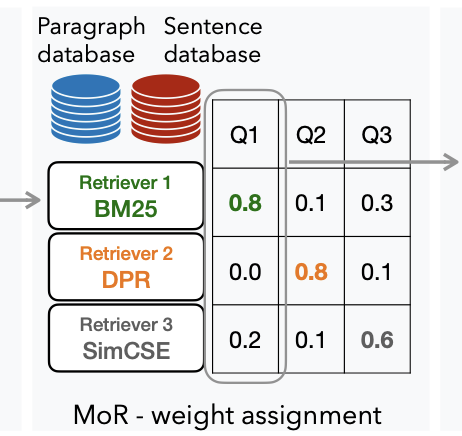
A standard RAG system assumes a single retriever. However, an agent may have many options to
choose from, each strong on different queries. I work on selecting and combining retrievers so
that an agent gets the right evidence for the question.
Monetization in conversational AI systems.
Deployed systems face business realities that benchmarks leave out. How do we
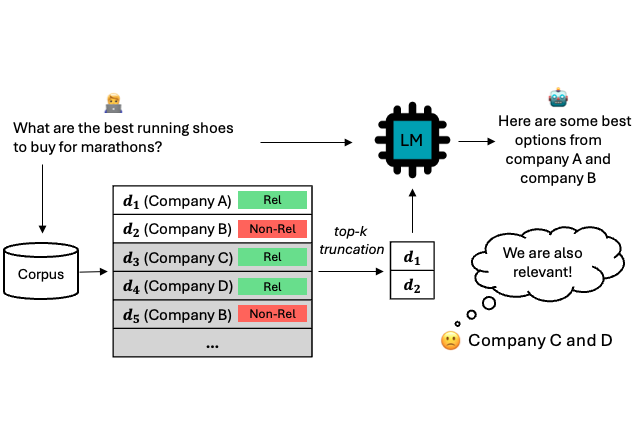
give data providers fair exposure for the content they supply? How can advertising be woven
into a conversation without interrupting the flow?
What does it take to actually build and operate one for thousands of real users?
Complex/ToT Query Retrieval.
A surprising share of web search queries are actually tip-of-the-tongue (ToT)
queries. In ToT known-item retrieval, the searcher cannot recall the name of what they are after
and can only describe it — at length, vaguely, and often inaccurately. I build the queries,
benchmarks, and shared evaluation tracks for retrieval when there is nothing precise to lean on.
(Exa has adopted ToT as one of its benchmarks.)
Jul 2025🚀 Four contributions at SIGIR/ICTIR 2025: presented ToT Query Elicitation, co-organised the REML tutorial, and LTRR was a spotlight at the LiveRAG workshop. Fair RAG appeared at ICTIR 2025.
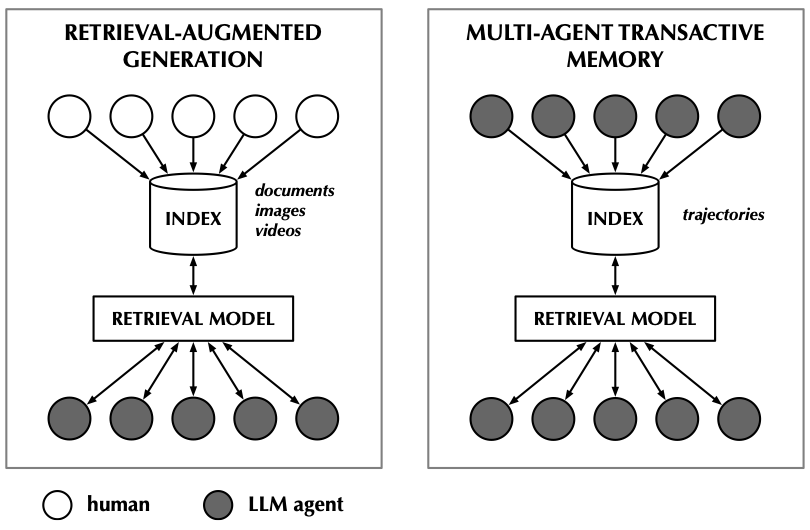
We propose Multi-Agent Transactive Memory (MATM), a framework for population-level storage and retrieval of agent-generated trajectories, where producer agents contribute trajectories to a shared repository and consumer agents retrieve them to improve task execution.
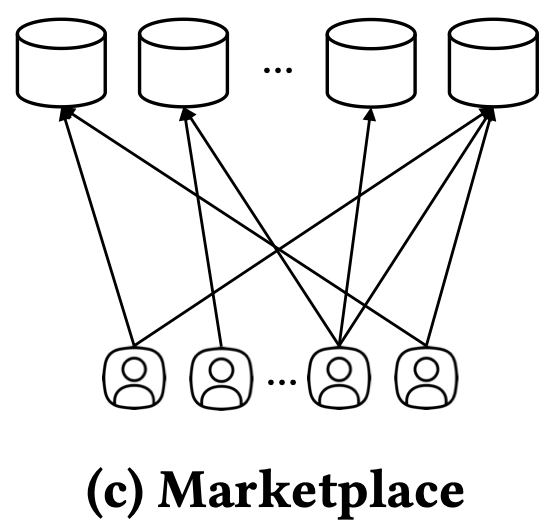
We introduce Marketplace Evaluation, a simulation-based paradigm that evaluates information access systems as participants in a competitive marketplace. By simulating repeated interactions and evolving user and agent preferences, the framework enables longitudinal evaluation and marketplace-level metrics, such as retention and market share, that complement and can extend beyond traditional accuracy-based metrics.
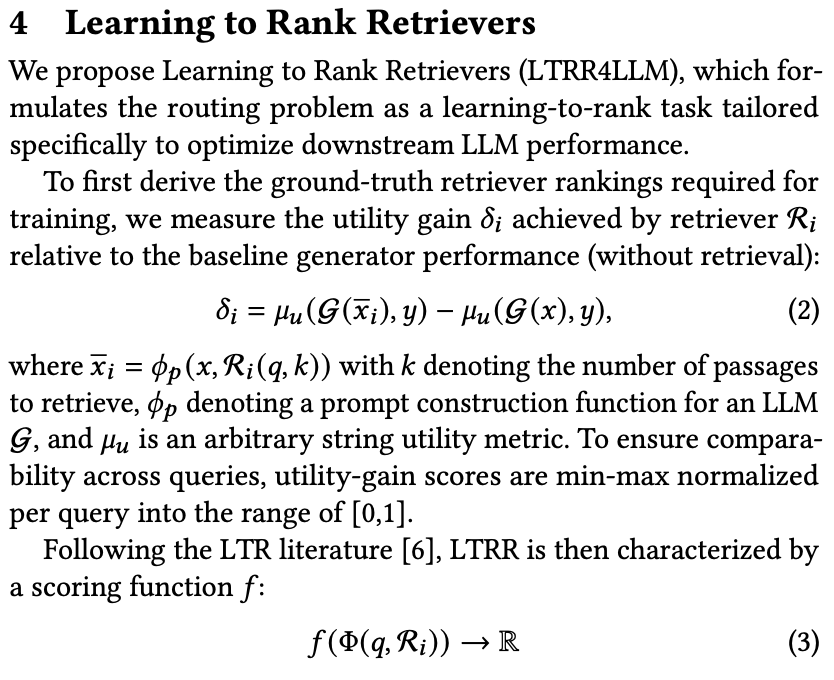
Ranking the rankers. We explore a query routing approach that dynamically selects from a pool of retrievers based on the query, using both train-free heuristics and learned routing models. We frame routing as a learning-to-rank (LTR) problem and introduce LTRR, a framework that learns to rank retrievers by their expected utility gain to downstream LLM performance.
Can we dynamically select and integrate multiple retrievers for each individual query, without the need for manual selection? In this work, we validate this intuition with quantitative analysis and introduce mixture of retrievers: a zero-shot, weighted combination of heterogeneous retrievers.
We conduct the first comprehensive study of fairness-aware ranking in RAG systems, covering both ranking fairness and attribution fairness — ensuring balanced exposure of retrieved documents and equitable crediting of sources. Analyzing 12 RAG models across 7 tasks, we find that fairness-aware retrieval often maintains or enhances both ranking effectiveness and generation quality.
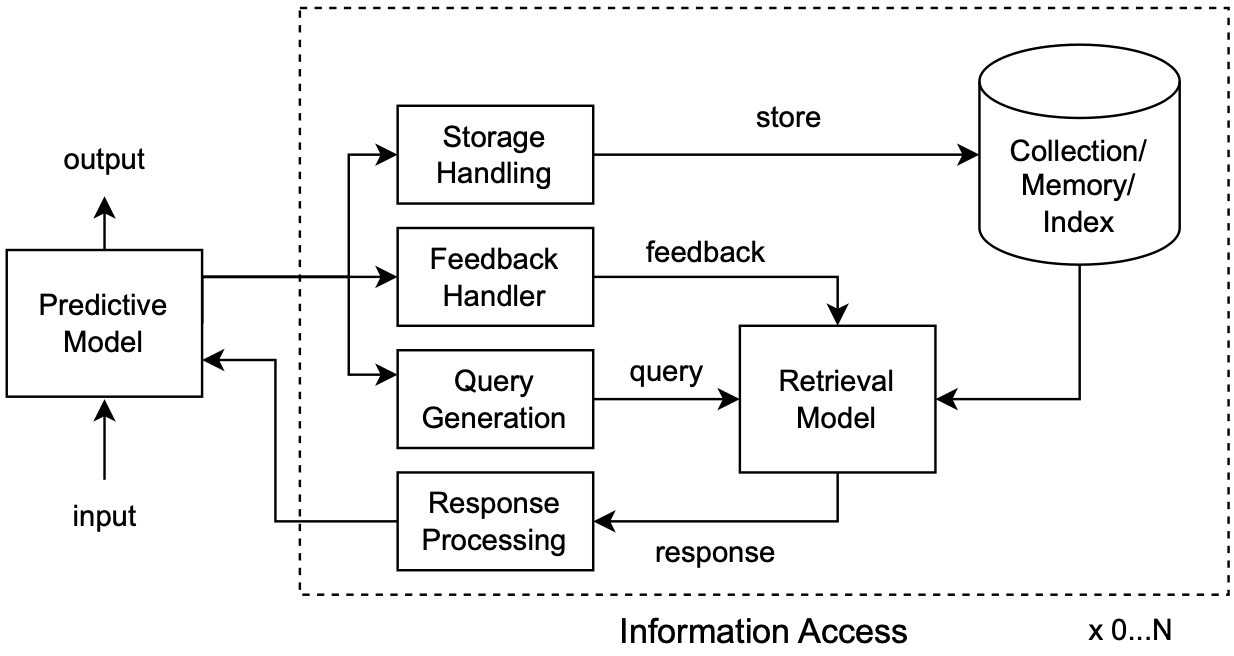
We posit that the paradigm of retrieval-enhancement can be extended to a broader spectrum of machine learning — computer vision, time series prediction, and computational biology — not just NLP. We introduce a formal framework of Retrieval-Enhanced Machine Learning (REML), synthesizing literature across domains under consistent notation.