Publications
19 papers. Full list also on Google Scholar.
2026
COLM 2026 Lifelong Agents Workshop
* denotes equal contribution.
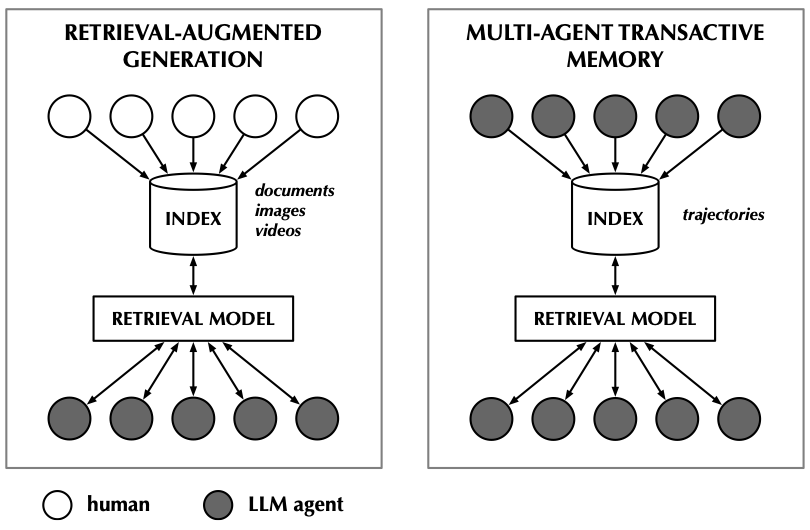
We propose Multi-Agent Transactive Memory (MATM), a framework for population-level storage and retrieval of agent-generated trajectories, where producer agents contribute trajectories to a shared repository and consumer agents retrieve them to improve task execution.
SIGIR 2026 (Perspectives)
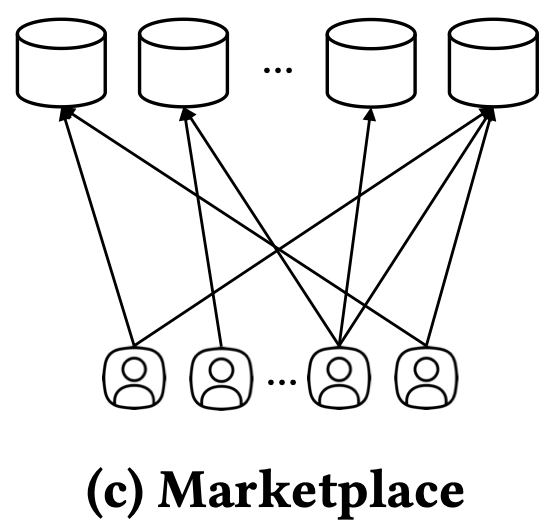
We introduce Marketplace Evaluation, a simulation-based paradigm that evaluates information access systems as participants in a competitive marketplace. By simulating repeated interactions and evolving user and agent preferences, the framework enables longitudinal evaluation and marketplace-level metrics, such as retention and market share, that complement and can extend beyond traditional accuracy-based metrics.
SIGIR 2026
SIGIR 2025 LiveRAG Workshop — Spotlight
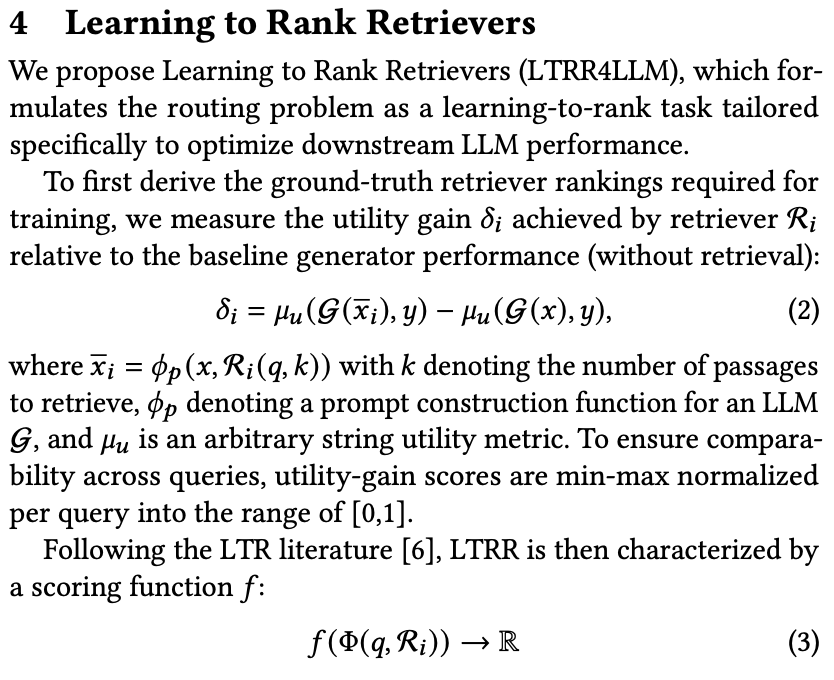
Ranking the rankers. We explore a query routing approach that dynamically selects from a pool of retrievers based on the query, using both train-free heuristics and learned routing models. We frame routing as a learning-to-rank (LTR) problem and introduce LTRR, a framework that learns to rank retrievers by their expected utility gain to downstream LLM performance.
2025
EMNLP 2025 (Main)
* denotes equal contribution.
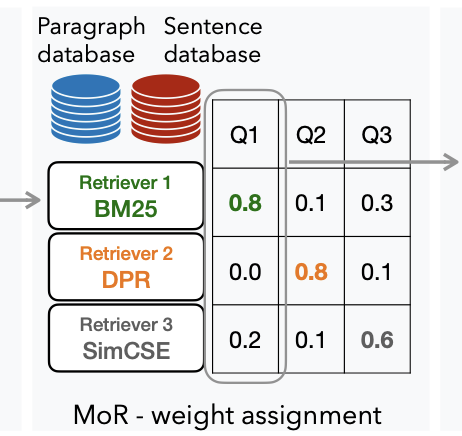
Can we dynamically select and integrate multiple retrievers for each individual query, without the need for manual selection? In this work, we validate this intuition with quantitative analysis and introduce mixture of retrievers: a zero-shot, weighted combination of heterogeneous retrievers.
CLEF 2025 Touché Lab
🏆 Best Paper Award
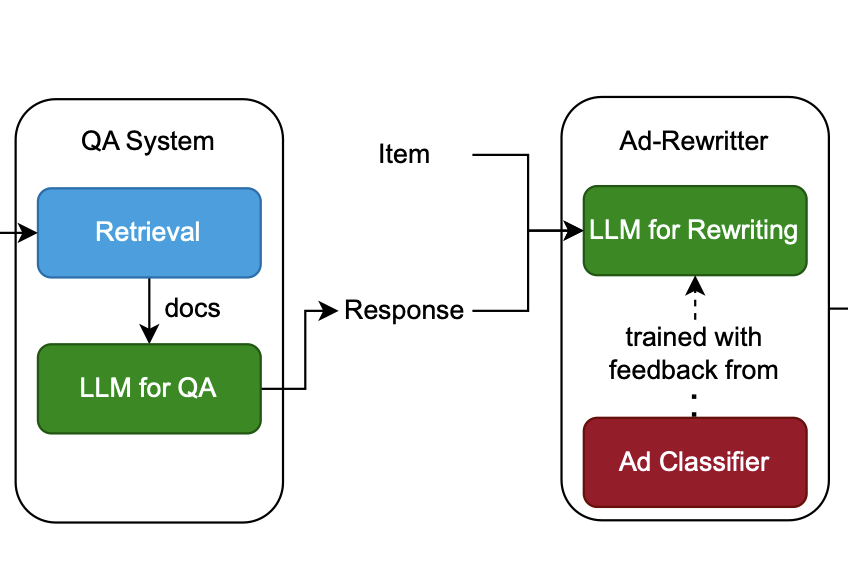
We propose a modular pipeline for advertisement management in RAG-based conversational systems, consisting of an ad-rewriter for seamless ad integration and a robust ad-classifier for detection.
SIGIR 2025
* denotes equal contribution.
paper / LLM elicitation code / human elicitation code
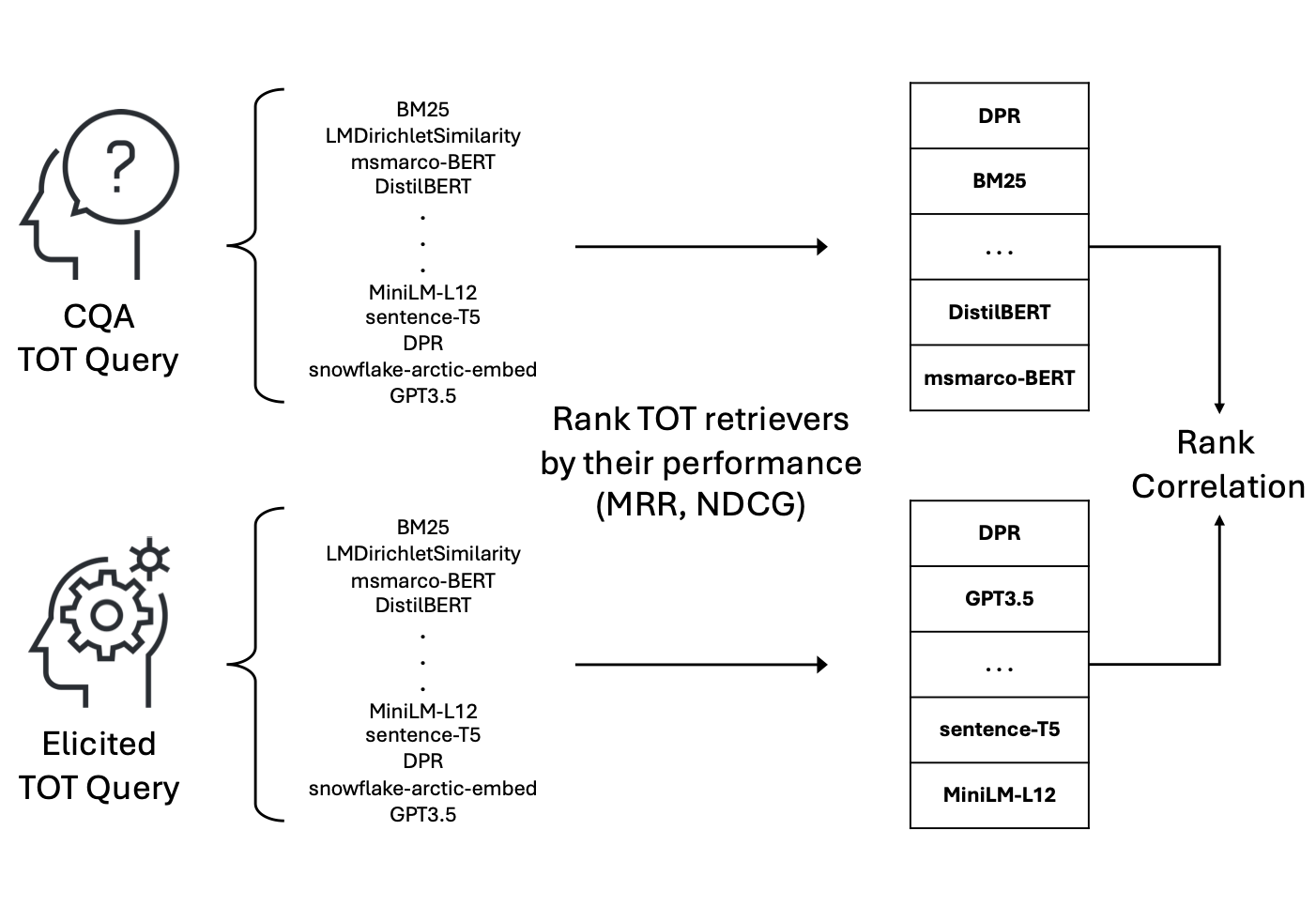
We introduce methods for eliciting tip-of-the-tongue (ToT) queries using large language models and human participants, enabling scalable and systematic evaluation of ToT retrieval systems. Our LLM-based simulator generates synthetic ToT queries that align well with human-created ones, while our human elicitation interface uses visual stimuli to induce the ToT state. Our LLM-elicited queries are featured in the TREC 2024 ToT track, with human-elicited queries in TREC 2025.
ICTIR 2025
NeurIPS 2024 AFME Workshop — Top-3 Spotlight
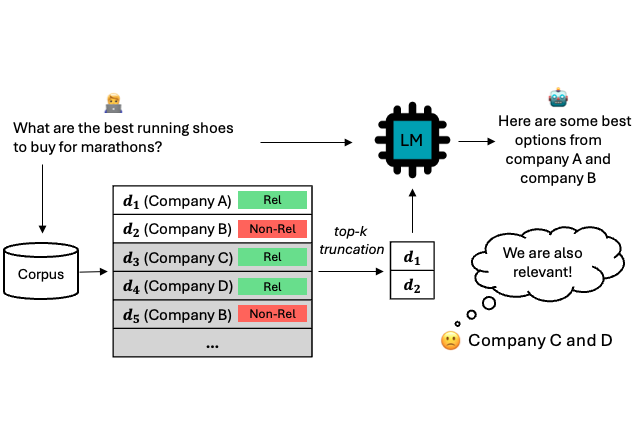
We conduct the first comprehensive study of fairness-aware ranking in RAG systems, covering both ranking fairness and attribution fairness — ensuring balanced exposure of retrieved documents and equitable crediting of sources. Analyzing 12 RAG models across 7 tasks, we find that fairness-aware retrieval often maintains or enhances both ranking effectiveness and generation quality.
2024
SIGIR 2025 Tutorial
SIGIR-AP 2024 Tutorial
paper / SIGIR 2025 tutorial / SIGIR-AP 2024 tutorial / website
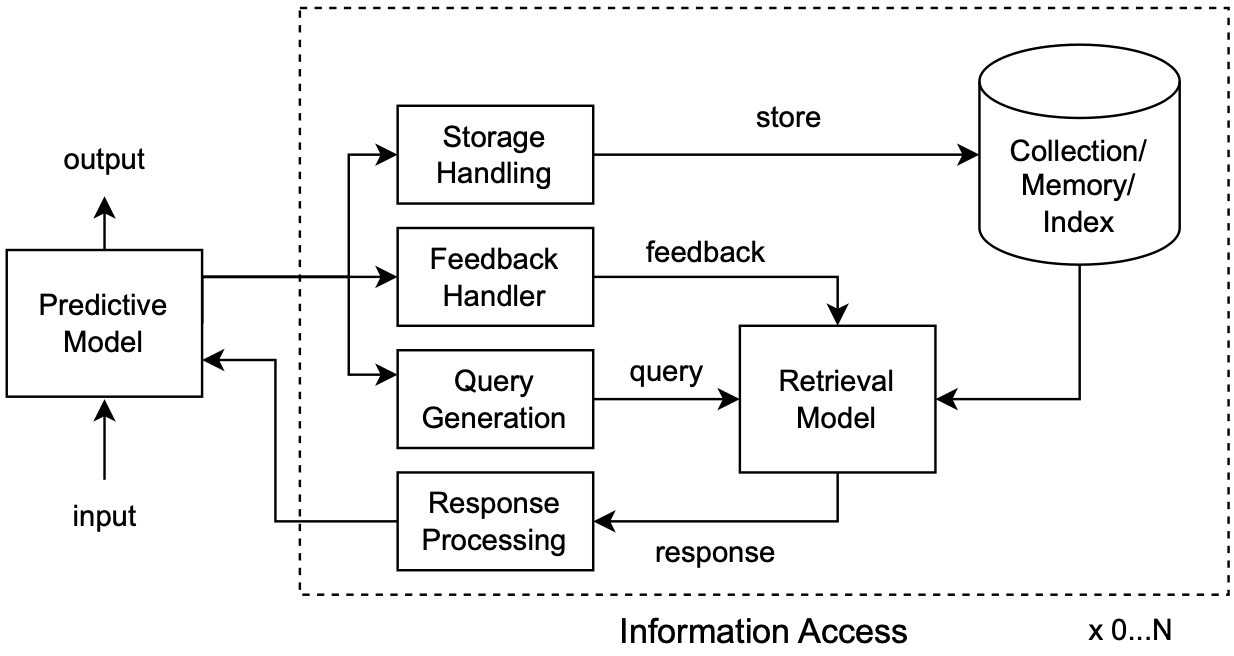
We posit that the paradigm of retrieval-enhancement can be extended to a broader spectrum of machine learning — computer vision, time series prediction, and computational biology — not just NLP. We introduce a formal framework of Retrieval-Enhanced Machine Learning (REML), synthesizing literature across domains under consistent notation.
2023
Preprint
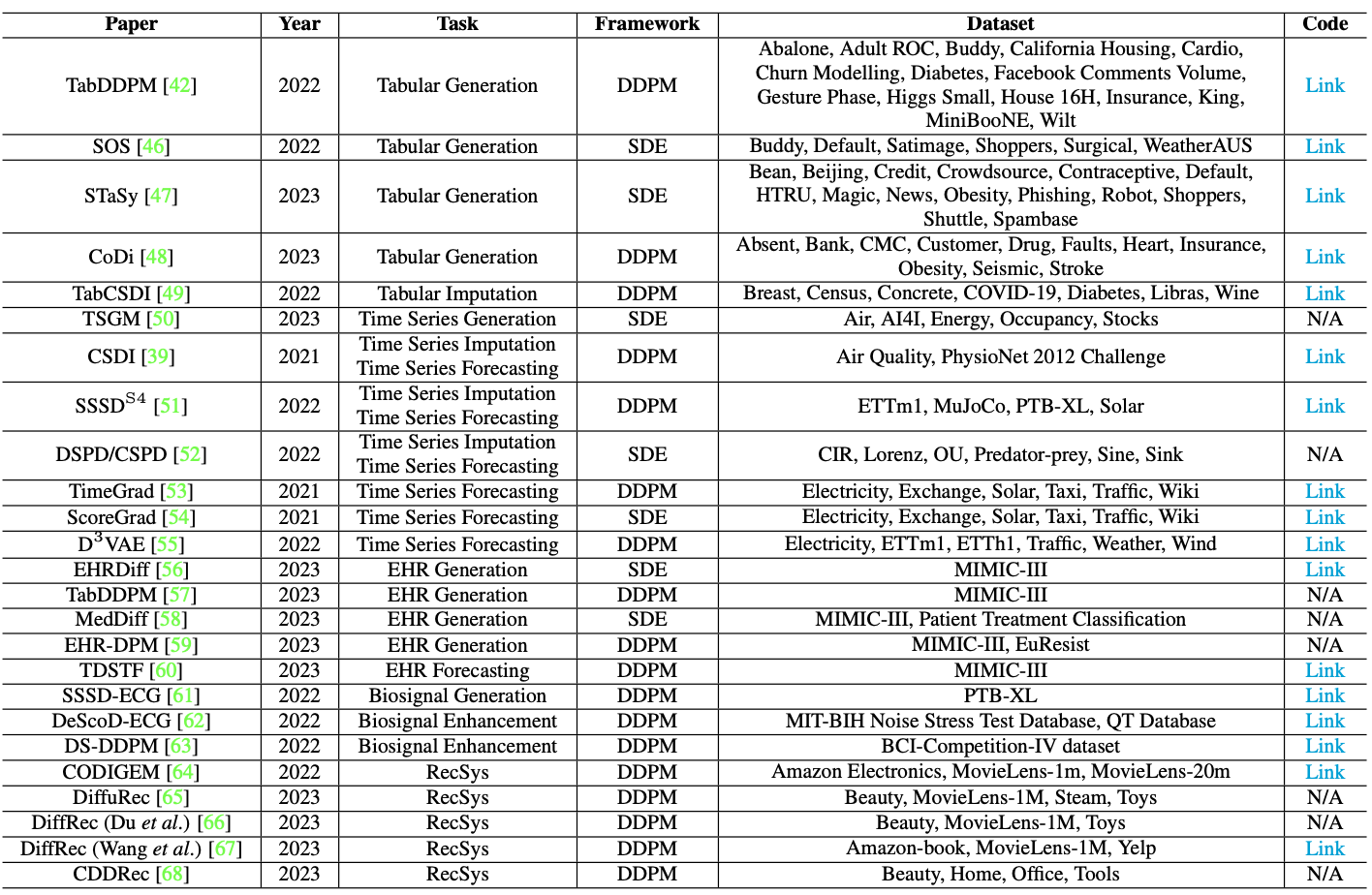
A comprehensive review of diffusion models for structured data. We give a concise overview of score-based diffusion theory, then survey pioneering works across data-driven general tasks and domain-specific applications, and discuss the limitations and open directions of existing work.
2022
SIGIR 2022
SIGIR 2022 SCAI Workshop — Oral
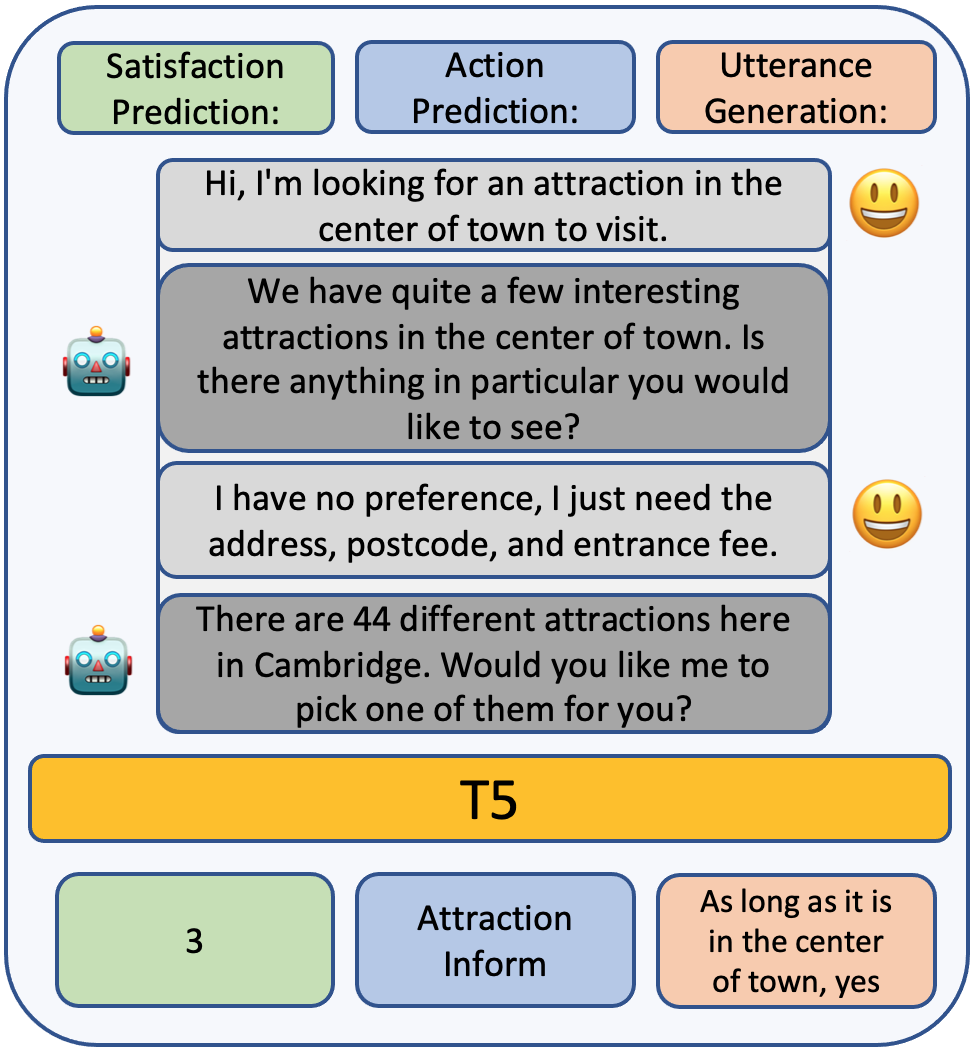
A conversational user simulator that generates user-side utterances and jointly predicts the user's next action and satisfaction level through multi-task learning. State of the art in satisfaction and action prediction on the USS dataset.
Alexa Prize TaskBot Challenge Proceedings
* denotes equal contribution.
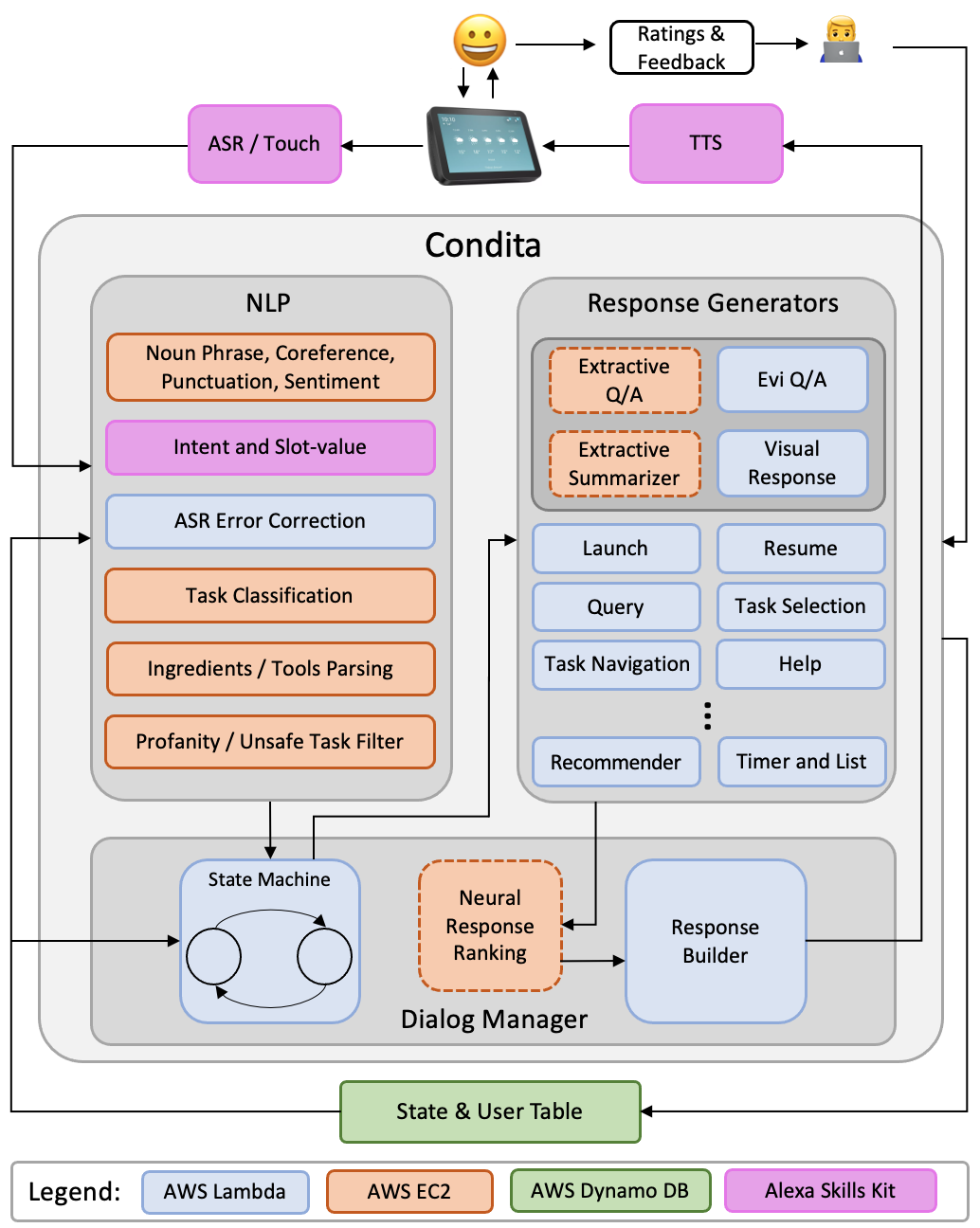
We present the COoking-aNd-DIy-TAsk-based (Condita) task-oriented dialogue system for the first Alexa Prize TaskBot Challenge. Condita is a multi-modal agent that assists users with cooking and home improvement tasks; we discuss its state machine like architecture and the conversational strategies behind its performance.
NeurIPS 2022 Competition — IGLU
🏆 Research Prize Winner
* denotes equal contribution.
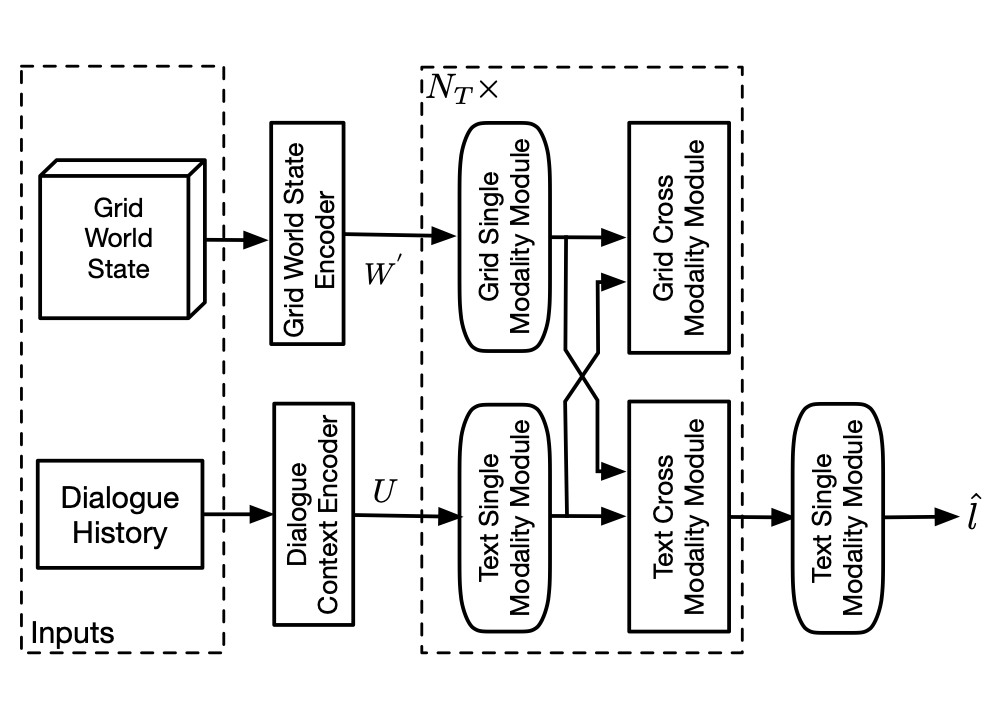
We address two questions in the IGLU NLP task: when should an agent ask for clarification, and what clarification question should it ask. Our classification model reaches an F1 of 0.757 (3rd on the leaderboard), and our ranking model reaches roughly 0.38 MRR by extending a traditional ranking model.
ESANN 2022
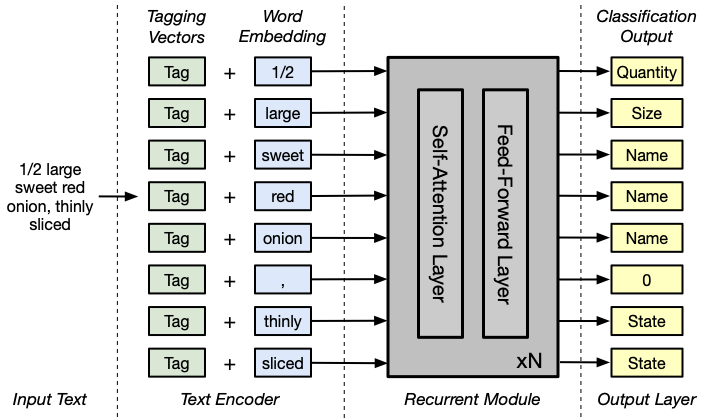
Spin-off research from the Alexa Prize TaskBot Challenge. To assist users with cooking, ingredients and their attributes — name, unit, quantity — must be surfaced precisely and promptly; we propose a new ingredient parsing model to do so.